Tuesday, December 31, 2019

The Largest Train Station in The World


1/5

New York Central Station is also called Grand Central Station of New York. New York Central Station is located in the center of Manhattan, New York, USA. For more than a century, there is no second railway station that can shake the position of New York Central Station in the world's largest railway station.

2/5

It is said that New York Central Station is the largest railway station in the world. So, how big is it? New York's Central Station has 44 platforms. The two-story railway is underground, the 41 underground tracks are on the ground floor, and the 26 underground tracks are on the second floor. The total area is 190,000 square meters. Some people say that New York's Central Station has the largest public space in the world, even larger than the atrium of Notre Dame.

3/5

New York's Central Station was built in 1903 and officially opened on February 2, 1913. New York's Central Railway Station was built by the Vanderbilt family of Kings of the American Railroad and is a famous landmark in New York. The vaulted dome inside the station is a splendid hall. Marble staircases, sky map murals, Roman stone pillars and classical statues have transformed the station into a palace of elegant art.

4/5

The central hall is often the place where people meet, and the four-sided clock at the information desk is the most striking landmark in the station. The four sides of the clock are all made of opal stones and are worth between $10 million and $20 million. In the inquiry office, there is a secret passage to the ground. Outside grand central station, the main entrance facing 42nd street has the world's largest tiffany glass, which is flanked by statues of Greek gods such as menelva, hermes and mercury.

5/5

Many people can be seen looking up in the lobby. This is the most attractive mural of the starry sky. French artist Paul César Helleu has drawn a map of the 12th zodiac based on medieval manuscripts. There are more than 2,500 stars. The sky painted on the star map is reversed. The descendants of the Vanderbilt family explained that it was overlooking the starry sky from the perspective of God, so contrary to the human perspective, the starry sky was viewed from a world other than the starry sky.


Sunday, December 29, 2019

The good, bad & ugly of drones #Technology


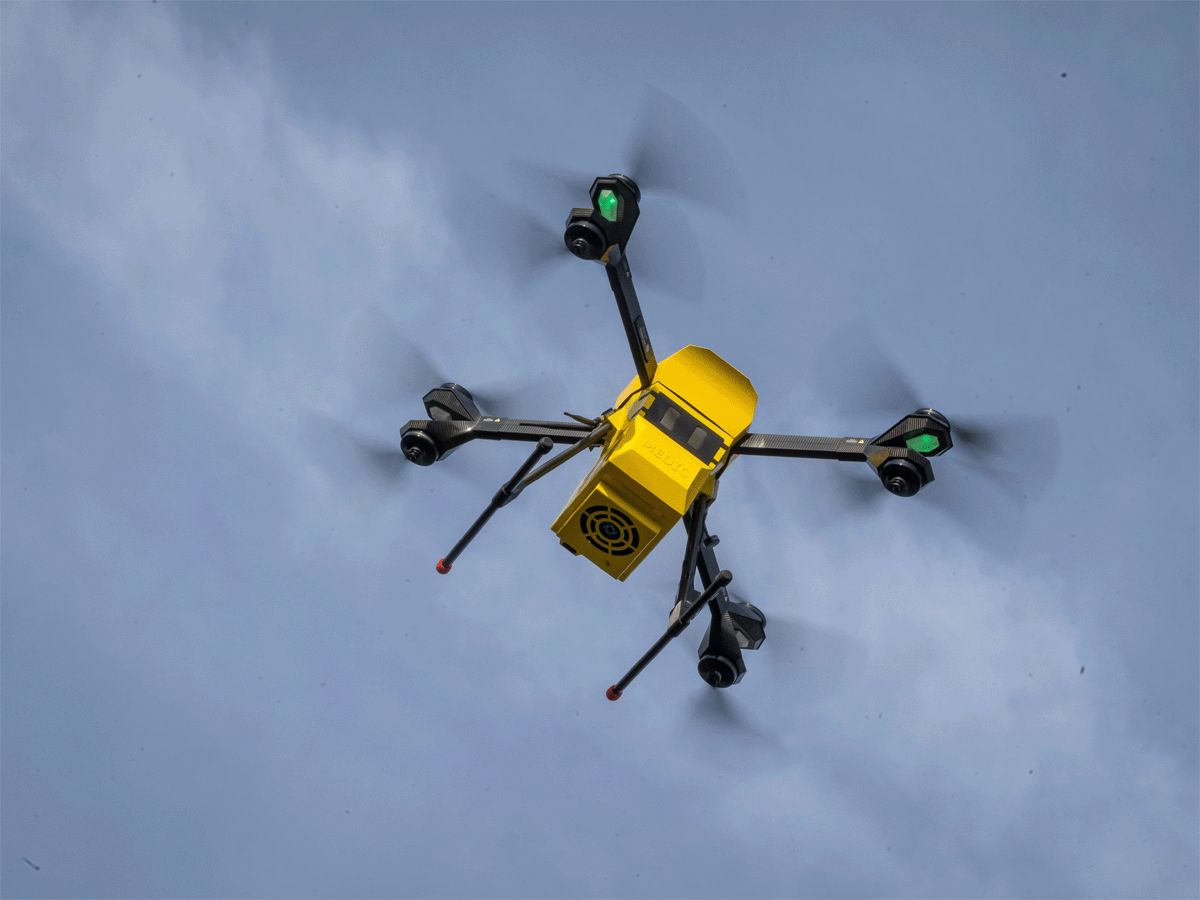
The drone revolution is here. From monitoring borders to supplying critical medical supplies in remote areas in Rwanda, drones have become so ubiquitous today that even wedding photographers use drones to take photos and shoot videos. It has even led to the rise of drone racing as a spectator sport.

The potential and danger of a technology that was largely limited to the military became evident to everyone in September when rebels used drones to carry out stealth attacks on an oil facility in Saudi Arabia.

Major improvements in cameras, sensors and processing capacities have made these unmanned aerial vehicles (UAVs) more versatile. And their usage is set to grow. Barclays estimates that the $4 billion global commercial drone market will touch $40 billion in five years, resulting in cost savings of up to $100 billion for corporations.

Future drones will move faster and farther and have enhanced capabilities like better thermal-imaging cameras.

Drone swarms — or “a collective organism, sharing one distributed brain for decision-making and adapting to each other like swarms in nature” — will see more deployment in military and industrial spheres. The attack on Saudi Arabia’s oil facilities — rebels claimed 10 drones were used — is an example of a drone swarm.

A major focus of drone research is on increasing the number of hours a UAV can stay in the air so that the usage and deployment possibilities of these machines can be widened. Some, like German firm Volocopter, are betting on high-capacity batteries, while others are exploring powering drones with hydrogen, an emission-free fuel source that is available in abundance. Another interesting area of research is on building docking and tethering tech.

Just like a bird perches on a branch to rest, drones are being designed to grasp on to something like a pole so that it can conserve energy while continuing its job of taking photos or monitoring a place.

Work is also going on to develop anti-drone tech — drones that can catch other drones, or shotgun shells that release weighted nets to drag drones down, or radio-frequency jammers to bring down UAVs.

Simple to acquire and easy to adapt to remote systems, drones are opening new frontiers. But technology is a double-edged sword. Governments can use drones to monitor citizens surreptitiously. Even nonstate actors can easily get their hands on drones and wreak havoc. It is critical that innovators and regulators work together to ensure UAVs are used for the larger good.


Friday, December 27, 2019

Jeff Bezos’ big tech bets...#Technology

 – 


Amazon Inc, the world’s largest online retailer, is being known these days as more of a technology company, and rightly so.

Technology is at the core of whatever Amazon does — from algorithms that forecast demand and place orders from brands, and robots that sort and pack items in warehouses to drones that will soon drop packages off at homes.

At its new Go Stores, for instance, advances in computer vision have made it possible to identify the people walking in and what products they pick up, helping add them to their online shopping carts.

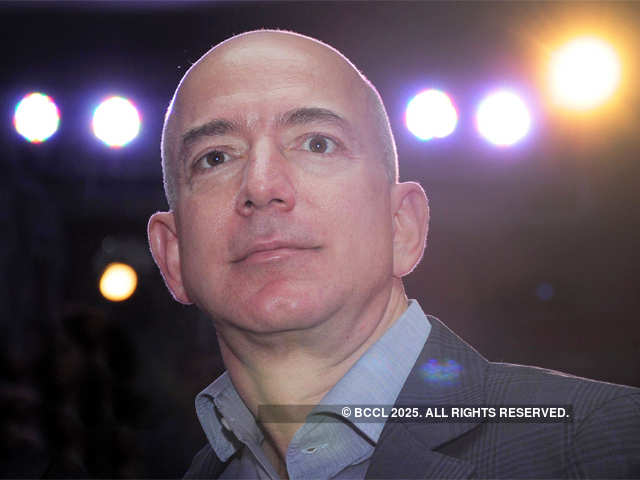
Jeff Bezos, the founder of Amazon and the world’s richest man, is always pulling new rabbits out of his hat, like next-day or same-day shipping and cashier-less stores. Besides, there is Blue Origin, the aerospace company privately owned by Bezos, which is on a mission to make spaceflight possible for everyone.

Be that as it may, a lot more disruption aimed at reaching the common man is on the anvil.

The most far-reaching and impactful technologies being developed today are for Amazon’s own use, but some others have the potential to disrupt every sector.

The technology marvels that Amazon Web Services — the largest profit driving unit in Bezos’ stable — is working on could jolt several industries, including in India, in the same way that Amazon once disrupted retail.

“In retail, while things like the size of the catalogue, advertising and other stuff might play a role in success, at Amazon, I think success is largely technology driven,” said Chief Technology Officer Werner Vogels.

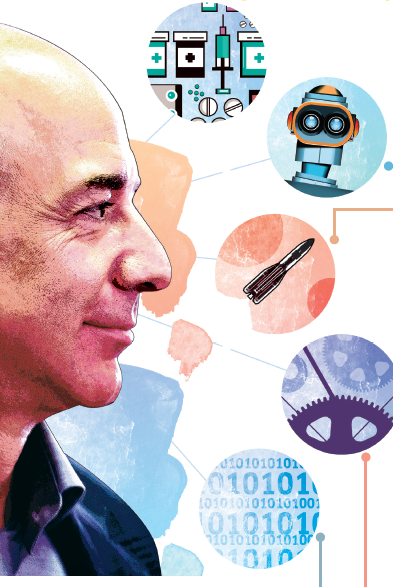
The ecommerce giant is using advances in technology to disrupt several sectors outside of retail though — medicine, banking, logistics, robotics, agriculture and much more. Interestingly, some of that work is happening in India.

Initially, the thinking was around allowing enterprises in these sectors to grow by using its cloud storage and computing capabilities.

Now, Amazon’s reach has become more nuanced and it has moved up the value chain.

For example, no longer is Amazon offering banks a place to securely store information, it is going beyond by offering tools to detect fraud, making it unnecessary for the lenders to build expensive data science teams in-house.

It is a similar story in other industries, made possible due to the massive amounts of data that Amazon collects and processes.

“We give people the software capability, so they no longer need to worry about that side of things. Most of our services are machine learning under the covers (and) that’s possible mostly because there’s so much data available for us to do that,” Vogels said.


Medicine

Hospitals in the United States have to save imaging reports for years. Earlier these were stored on tapes, since doing so digitally cost millions of dollars.

The advent of cheaper cloud storage meant new scans could be saved digitally, making them accessible to doctors on demand.

Now, doctors could refer to a patient’s earlier CT scan and compare that with the new one to diagnose an ailment, said Shez Partovi, worldwide lead for healthcare, life sciences, genomics, medical devices and agri-tech at Amazon.

The power of cloud and AWS’ own capabilities in medical technology have only expanded since.

Healthcare and life sciences form rapidly scaling units of AWS, which is building a suite of tools that allow breakthroughs in medicine — from hospitals using the tools to do process modelling or operational forecasting, refining the selection of candidate drugs for trial or delivering diagnoses through computer imaging.

Developed markets will be the first to adopt such technologies, but AWS is seeing demand surge from the developing world, including India.

“Not everyone is within a mile of a radiologist or physician, so diagnostics through AI could solve for that. Further, there’s a lack of highly trained people, but when all you have to do is take an image, it requires a lot less training,” said Partovi.

Space
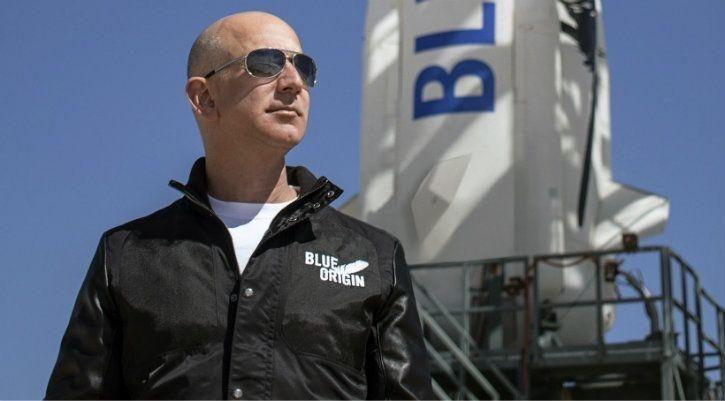


Bezos, in his private capacity, is now looking to connect remote regions with high-speed broadband. He is building a network of over 3,000 satellites through “Project Kuiper”, which will compete with Elon Musk’s SpaceX and Airbus-backed OneWeb.

The bigger bet is in outer space though. His rocket company Blue Origin has already done commercial payloads on New Shepard, the reusable rocket that competes with SpaceX’s Falcon 9. The capsule atop the New Shepard can carry six passengers, which Bezos looks to capitalise on for space tourism, a commercial opportunity most private space agencies are looking at.

It is also building a reusable rocket – Glenn, named after John Glenn, the first American to orbit the earth — which can carry payloads of as much as 45 tonnes in low earth orbit.

Bezos’ aim, however, is to land on the Moon. His Blue Moon lander can deliver large infrastructure payloads with high accuracy to pre-position systems for future missions. The larger variant of Blue Moon has been designed to land a vehicle that will allow the United States to return to the Moon by 2024.

Robotics


Image Source: Jeff Bezos/Twitter
Amazon’s take on robotics is grounds-up.

The company has been part of an open-source network that is developing ROS 2 or Robot Operating System 2, which will be commercial-grade, secure, hardened and peer-reviewed in order to make it easier for developers to build robots.

“There is an incredible amount of promise and potential in robotics, but if you look at what a robot developer has to do to get things up and running, it’s an incredible amount of work,” said Roger Barga, general manager, AWS Robotics and Autonomous Services, at Amazon Web Services.

Apart from building the software that robots will run on, AWS is also making tools that will help developers simulate robots virtually before deploying them on the ground, gather data to run analytics on the cloud and even manage a fleet of robots.

While AWS will largely build tools for developers, as capabilities such as autonomous navigation become commonplace, the company could look to build them in-house and offer them as a service to robot developers, Barga said.

With the advent of 5G technology, more of the processing capabilities of robots will be offloaded to the cloud, making them smarter and giving them real-time analytics capabilities to do a better job. For India, robot builders will be able to get into the business far more easily, having all the tools on access, overcoming the barrier of a lack of fundamental research in robotics.

Enterprise Technology



AWS might be a behemoth in the cloud computing space, but cloud still makes up just 3% of all IT in the world. The rest remains on-premise. While a lot will migrate to the cloud, some will not. In order to get into the action in the on-premise market, Amazon has innovated on services that run on a customer’s data centre, offering capabilities as if the data is stored on the cloud.

With Outposts, which was announced last month, AWS infrastructure, AWS services, APIs, and tools will be able to run on a customer’s data centre.

Essentially, this will allow enterprises to run services on data housed within their own data centres, just like how they would if it had been stored on AWS.

The other big problem that AWS is looking to solve is not having its own data centres close enough to customers who require extremely low-latency computing. For this, the company has introduced a new service called Local Zones, where it deploys own hardware closer to a large population, industry, and IT centre where no AWS Region exists today.

Both these new services from AWS could be valuable in India given the lower reach of cloud computing among enterprises as well as stricter data localisation requirements.

Artificial Intelligence/Machine learning



Amazon is moving up the value chain in offering services backed by artificial intelligence and machine learning to automate repetitive tasks done by human beings.

Enterprise customers will simply be able to buy into these services with minimal customisation and without a large data science and artificial intelligence team.

In December, AWS launched its Fraud Detector service that makes it easy to identify potentially fraudulent activity online, such as payment fraud and creation of fake accounts. Even large banks in India have struggled to put together teams to build machine learning models for fraud detection, but with such a service they can train their systems easily.

Code Guru is another service that uses machine learning to do code reviews and spit out application performance recommendations, giving specific recommendations to fix code. Today, this is largely done manually, with several non-technology companies struggling to build great software for themselves due to bad code.

Transcribe Medical is a service that uses Amazon’s voice technology to create accurate transcriptions from medical consultations between patients and physicians. Medical transcription as a service is a big industry in India, and India’s IT service giants hire thousands to review code. These services are expected to replace mundane manual tasks, freeing up resources for sophisticated tasks, and could lead to disruption.



Thursday, December 26, 2019

2019 In Review: Bollywood Celeb Investments In Startups This YearStartup News


This article is part of Inc42’s special year-end series — 2019 In Review — in which we will refresh your memory on the major developments in the Indian startup ecosystem from international collaborations to celebrity investments and their impact on various stakeholders — from entrepreneurs to investors. Find more stories from this series here.


The startup ecosystem has taken on a new dynamic in India as startups are entering everyday conversations. From receiving investments from large family houses and venture capitalists, startups have also learned to bring in glamour and entertainment. In addition to promoting ventures through ad campaigns, celebrities, who are working in the entertainment industry, across the world are now realising that the real proposition lies in investments and entrepreneurship.

While Hollywood celebrities such as Ashton Kutcher, Snoop Dogg, Nas, Jay-Z, Justin Timberlake, among others have been extending their Midas touch to startups around the world, Bollywood stars such as Shahrukh Khan, Amitabh Bachchan, Madhuri Dixit, among others have been fulfilling the glamour appetite of the Indian startup ecosystem.

Following the legacy of these veteran superstars, new-age Bollywood actors such as Ayushmann Khurrana, Deepika Padukone, and Arjun Kapoor became angel investors for some of the startups in 2019. Also, besides her big fat wedding, India’s desi girl Priyanka Chopra also made headlines in the startup ecosystem this year.

Here is the list of Bollywood celebrities who backed startups in 2019

Deepika Padukone


With a strategic partnership with Mumbai-based FMCG health food brand, Epigamia, Bollywood actress Deepika Padukone forayed into the startup ecosystem. The investment by Padukone came as an extension of the Series C funding round of Epigamia, which was led Verlinvest, Danone Manifesto Ventures, and DSG Consumer Partners.

Founded in 2015 by Rohan Mirchandani, Uday Thakker, Ganesh Krishnamoorthy, and Rahul Jain, Epigamia started as a Greek yoghurt brand. In its four years of journey, the brand has added other healthy F&B products, such as artisanal curd, snack packs, Indian sweets, and smoothies, to its kitty.

Padukone’s second investment this year came from her family office, Ka Entreprises, for investing in Delhi-based Blu Smart. JITO Angel Network, Kalpavriksh Trust, Survam Partners, cofounder of Micromax Rajesh Agarwal, and the MD of Bajaj Capital Sanjiv Bajaj also participated in the $3 Mn angel funding round of Blu Smart.

Launched in January 2019, Blu Smart started as an electric cab-hailing platform. In June 2019, the Delhi-based company pivoted to offer subscription-based car rentals, ride-sharing on both electric cars and bikes, and shared EV charging infrastructure across Delhi NCR region.

In addition to becoming an angel investor, Padukone also started her entrepreneurial journey with women focussed fashion label All About You and an NGO, Live Life Foundation.

Akshay Kumar


Famous for his athletic lifestyle on and off the screen, Bollywood actor Akshay Kumar’s investment journey followed his lifestyle patterns. Kumar, in June 2019, invested in Mumbai-based wearable tech startup, GOQii.

Founded in 2014 by Vishal Gondal, GOQii is a smart wearable device. It helps users to track their step count, sleep, and other physical activities. Moreover, GOQii’s smart ecosystem integrates real-time personalised coaching, a health ecommerce platform, scheduling health checkups, a health tracking feature, among other tools.

As part of this deal, Kumar also joined the company’s board as an investor and strategic advisor. Kumar is also hosting one of GOQii’s health education initiatives, India Health Quiz, on the mobile app. The actor will also conduct live coaching sessions on GOQii Play.

Aishwarya Rai Bachchan


Sidelining from Bollywood, former Miss World and Bollywood actor Aishwarya Rai Bachchan started her journey as an angel investor with an investment in Bengaluru-based environmental intelligence startup Ambee. Rai along with her mother Vrinda KR invested INR 50 Lakh each in Ambee.

Founded by Akshay Joshi, Jaideep Singh and Madhusudan Anand in 2017, Ambee provides hyperlocal air quality data. The data is then made accessible to developers, consumers, health researchers and media companies. For tracking the air quality data, the platform uses proprietary data and analytics to help customers make informed decisions or take preventive measures in a situation of severe environmental distress.

Arjun Kapoor


With a focus to empower women, Bollywood actor Arjun Kapoor invested in homemade food delivery company Foodcloud in May 2019. “My aim at investing in Foodcloud.in is to contribute towards a larger societal purpose of empowering the homemakers to contribute towards their family income,” he previously said.

Founded by Vedant Kanoi, Shamit Khemka, and Sanjhi Rajgarhia, the food delivery platform runs on the premise of home cooks delivering hygienic and home-cooked food to customers from their kitchens.

On bringing Kapoor onboard, Kanoi said that having a “socially conscious youth icon” like Kapoor’s support is a dream come true. “He has enjoyed the homemade food by our talented home chefs in Delhi and we’re excited to have his support to grow our initiative to new cities,” he said.

Priyanka Chopra


2019 has been arguably the most happening year for Bollywood actor Priyanka Chopra. She became one of the Bollywood’s representatives to invest in international startups.

This year, Chopra made investments in the alternative college education startup Holberton School and dating app Bumble. Founded in 2015 by Julien Barbier, Rudy Rigot and Sylvain Kalache, San Francisco-based Holberton School is a project-based alternative to college for creating the next generation of software engineers.

Moreover, her other investment, Bumble, was founded by Whitney Wolfe Herd in ‎2011 as a “feminist dating app”. In a tweet, Chopra had said that she is honoured to join the two companies that are striving to expand gender diversity in the tech space and make a social impact for the greater good of society.

Sukhbir Singh


Singer Sukhbir Singh also made a noise in the startup ecosystem with his investment in Gurugram-based beverage startup, LQI. Singh participated in the $200K funding round of this startup.

Founded in 2016, LQI uses their proprietary technology for the production of its branded smoothies, milkshakes and fruit water frozen packs made with 100% raw fresh fruit with an increased shelf life of 2.5 months without the use of any colours, flavours, purees or preservatives. Shubham Khanna, Palak Kapoor and Kapil Kumar are the founders of this startup.

The singer didn’t stop by making a single investment and hence made his other investment in Amritsar-based electric bike rental company eBikeGo. Founded in 2017 by Dr Irfan Khan, eBikeGo currently operates in Delhi, Amritsar, Jaipur, Jalandhar, and Agra.

Ayushmann Khurrana


With an investment in Gurugram-based male grooming startup The Man Company (TMC), Bollywood actor Ayushmann Khurrana, who is well-known for his unique characters on the screen, started his 2019’s entrepreneurial journey.

Founded in 2015 by Bhisham Bhateja, Hitesh Dhingra, Rohit Chawla and Parvesh Bareja, TMC has gained popularity for offering a complete head-to-toe range of men’s grooming products across various categories, including bath and body management, shaving and perfumes.

Rana Daggubati


Bollywood actor Rana Daggubati, famous for playing the role of villain in multilingual epic Bahubali series, also made buzz in the startup ecosystem by launching an accelerator platform Urban-i.

Launched in partnership with early-stage VC, Anthill Ventures, Urban-i is a market access programme focused on accelerating the business growth of consumer brand startups in India.

The platform will serve as a strategically designed platform to bring together capital, consumer brands and celebrities under one platform. Speaking to Inc42, Rana Daggubati, said that the platform will help startups in finding the right marketing approach for the selected startups.

Katrina Kaif


Though most of the Bollywood actors have started their entrepreneurial journey from clothing brands, Katrina Kaif, this year, has grown her passion in founding cosmetics brand Kay Beauty.

Launched in partnership with Mumbai-based beauty ecommerce platform Nykaa, Kay Beauty deals cosmetic products priced in the range of INR 249 to INR 799 across Nykaa’s offline and online platforms.

Kay Beauty is Nykaa’s second big celebrity collaboration after it has partnered with designer Masaba Gupta for an exclusive cosmetic range.

As of now, Kay Beauty is offering a wide range of eye and lip products and Kaif claims that so far the brand has received a positive response which will help it to foray in other beauty segments such as skincare, haircare, among others.

Amitabh Bachchan


Popularly known as Big B of Bollywood, Amitabh Bachchan was the recent Bollywood celebrity to ring the bells the startup ecosystem. The veteran actor has invested in $28 Mn funding round of Mumbai-based edtech startup Eduisfun. Other angel investors such as HDFC chairman Deepak Parekh, Ogilvy Group chief creative officer Piyush Pandey and PwC partner – assurance Russel Parera also participated in this round.

Founded in 2014 by Praveen Tyagi and Jatin Solanki, Eduisfun develops gamified educational applications for school children belonging to CBSE and ICSE curriculums. Eduisfun’s flagship product STEPApp is an experiential learning platform that has been designed for students of private, central and tribal schools. Notably, the app even works on basic smartphones even with low data connectivity.


Wednesday, December 25, 2019

Bombay Shaving Company raises Rs 45 Cr led by Sixth Sense VenturesStartup News


Bombay Shaving Company (BSC) has raised Rs 45 crore in a new financing round, led by Sixth Sense Ventures with participation from existing investor Colgate Palmolive Asia Pacific.

After this fundraise, a clutch of angels and early employees have exited the men’s consumer products brand, which has picked up Rs 80 crore till date.

Close to 30 angels, including 16 partners from McKinsey including Noshir Kaka and Gautam Kumra, as well as S Ramadorai, former managing director of TCS; Kiran Deshpande, former CEO of Tech Mahindra, and Maninder Gulati, who heads strategy for Oyo, had backed the company in 2016, according to regulatory filings.

Early employees and angels have cashed out in a Rs 20 crore secondary round, racking up as much as six times their investment return in about three to three-and-a-half years. “The primary infusion of the current financing is more than ten times the first round,” said Shantanu Deshpande, founder, and CEO of BSC, declining to share specifics.

Secondary exits are critical for the early stage start-up ecosystem as they encourage more seed-level investments and establish the liquidity of stock options, a huge financial motivation for employees.

BSC, launched in 2016, started out as a direct to consumer premium experiential shaving regimen which then expanded into the skin, beard and bath segments with over 45 products across categories.

The brand aims to achieve an annualized turnover of Rs 100 crore by next year, and use the cash raised to invest in brand building, product development, and expansion.

“As an omnichannel brand, BSC will focus on expanding its current offline footprint of 3,000 stores to 10,000 stores in the coming months,” Deshpande said.

Consumer brands continue to be an exciting investment bet for investors, given that it takes far less capital to build a scalable business with the rise of online channels to market and increase the user base.

“Today, skincare and personal care are amongst the lowest per capita spend in India, at Rs 500-Rs 1,000 … Given the rising internet adoption and increasing intent from customers to spend on the category, we believe the trajectory to follow fashion and electronics…being digital-first is an exciting way of creating a market before exploiting the physical distribution model,” said Nikhil Vora, founder at Sixth Sense Venture Partners.

In the last two years, 70 consumer brand companies have been funded by venture capitalists to the tune of more than $300 million, data from Tracxn indicate.


Tuesday, December 24, 2019

5 Startup Funding Options for Your BusinessStartup Funding –


By Richard D. Harroch and Mike Sullivan

No matter how great your business idea is, one essential element of startup success is your ability to obtain sufficient funding to start and grow the business. While many people finance their new companies with their own capital or by borrowing money from family or friends, there are other options available. But startup founders must understand that raising startup funding is never easy, and usually takes longer than anticipated.

In this article, we review five key options to obtain startup funding for your company.

1. Angel Financing

Angel investors are typically individuals who invest in startup or early-stage companies in exchange for an equity ownership interest. Angel investing in startups has been accelerating, and high-profile success stories like Uber, WhatsApp, and Facebook have spurred angel investors to make multiple bets with the hopes of getting outsized returns.

The typical angel investment is $25,000 to $100,000 per company, but can go higher.

Here is what angels particularly care about:

  • The quality, passion, commitment, and integrity of the founders
  • The market opportunity being addressed and the potential for the company to become very big
  • A clearly thought out business plan, and any early evidence of obtaining traction toward the plan
  • Interesting technology or intellectual property
  • An appropriate valuation with reasonable terms (angel investors are investing at an early stage when risk is highest, so they typically require lower valuations to compensate)
  • The viability of raising additional rounds of startup funding if progress is made

There are a variety of ways to find angel investors, including through:

  • Other entrepreneurs
  • Lawyers and accountants
  • AngelList
  • Angel investor networks
  • Venture capitalists and investment bankers
  • Crowdfunding sites like Kickstarter and Indiegogo

The best way to find an angel investor is a solid introduction from a colleague or friend of an angel. Use LinkedIn to determine what connections you may already have. Angel investors are much more likely to invest if they know your sector well, so it often helps to start with your connections in that sector.

Serial entrepreneurs with successful past liquidity events are often some of the best angel investors—they have the cash to invest, but in addition to cash they also often bring other important benefits to a startup relationship, such as:

  • Contacts to venture capitalists
  • Contacts to strategic partners
  • Advice and counsel
  • Credibility by being associated with the investor
  • Contacts to potential customers
  • Contacts to potential employees
  • Contacts with lawyers, banks, accountants, and investment bankers
  • Knowledge of the marketplace and strategies of similar companies

For a comprehensive discussion of angel investing, see Angel Investing: 20 Things Entrepreneurs Should Know and 15 Expert Tips for Startups Seeking Angel or Seed Financing.

2. Crowdfunding

“Crowdfunding” is the practice of raising funding through multiple funders, often via popular crowdfunding websites.

Crowdfunding gives startup entrepreneurs the opportunity to raise startup funding for their business, and can help a company promote its products or services. Setting up a crowdfunding campaign is not very difficult. You set up a profile on a crowdfunding site, describing your company and its business, and the amount of money you are trying to raise. People who are interested in what you are trying to do can donate to your campaign, typically in exchange for some kind of reward for their donation (one of your products or services, a discount based on how much donated, or some other perk), or for some form of equity or profit share in your business.

The key to successful crowdfunding campaigns is to have a compelling story about your product, service, or company, and to offer a meaningful reward for donations. Some startups have been able to raise thousands to even millions of dollars via crowdfunding campaigns.

Rewards-based crowdfunding is a particularly attractive option for startups, as you are not giving away equity or part ownership in your company—you are just offering some of your products or services, or a discount on those products or services. And rewards-based campaigns are not burdened with interest or principal repayments the way small business loans are.

A crowdfunding campaign can also work to build a community of people interested in your company or products, and provides a sense of engagement for the donor.

Equity crowdfunding, a scenario in which you are selling stock or some other interest in your company in exchange for cash, requires strict compliance with federal and state securities laws, and you should not attempt to do this without help from a lawyer with relevant experience.

Each crowdfunding site charges some kind of fee to list your campaign, either a processing fee or a percentage of the funds raised. Some of the most popular sites include:

See Is Your Startup Ready for Equity Crowdfunding? 7 Questions to Ask

3. Small Business Credit Cards

A number of credit card issuers specifically cater to the small business market, and many come with special benefits: cash back rewards, airline mileage points, and other perks.

Some issuers require that the card be tied to the owner’s personal credit score and credit history and a guarantee from the owner. This would mean, of course, that any defaults or late payments on the business credit card would affect your personal credit rating.

Interest on unpaid balances on the credit card can be quite high, ranging from 5% to 19.9%. Some issuers offer a low or no interest introductory charge for a few months.

Applying for a small business credit card can be made through your bank or online. The main traditional small business lenders include Capital One, Wells Fargo, Chase, Bank of America, and American Express.

There has also been a new wave of credit card issuers that focus on the small business market and do not require personal guarantees, which means use of the card will not impact your personal credit score. One example is Brex, which offers a small business card for early-stage technology companies with professional funding. The credit limits of these types of cards can be substantially higher than traditional credit cards, and they often provide valuable rewards.

4. Venture Capital

Startups seeking financing often turn to venture capital (VC) firms. These firms can provide capital; strategic assistance; introductions to potential customers, partners, and employees; and much more.

Venture capital financings are not easy to obtain. Venture capitalists typically want to invest in startups that are pursuing big opportunities with high growth potential, and that have already shown some traction; for example, they have a working product prototype, early customer adoption, etc.

It is important to know that venture capitalists typically focus their investment efforts using one or more of the following criteria:

  • Specific industry sectors (software, digital media, semiconductor, mobile, SaaS, biotech, mobile devices, consumer, etc.)
  • Stage of company (early-stage seed or Series A rounds, or later stage rounds with companies that have achieved meaningful revenues and traction)
  • Geography (e.g., San Francisco/Silicon Valley, New York, etc.)

Before approaching a venture capitalist, try to learn whether his or her focus aligns with your company and its stage of development.

The second key point to understand is that VCs get inundated with investment opportunities, many through unsolicited emails. Almost all of those unsolicited emails are ignored. The best way to get the attention of a VC is to have a warm introduction through one of their trusted colleagues, or another professional acquaintance of the VC, such as a lawyer or fellow entrepreneur.

A startup must have a good “elevator pitch” and a strong investor pitch deck to attract the interest of a VC. For more detailed advice on this (as well as a sample pitch deck), see How to Create a Great Investor Pitch Deck for Startups Seeking Financing.

Startups should also understand that the venture process can be very time consuming—just getting a meeting with a principal of a VC firm can take weeks; followed up with more meetings and conversations; followed by a presentation to all of the partners of the venture capital fund; followed by the issuance and negotiation of a term sheet, with continued due diligence; and finally the drafting and negotiation by lawyers on both sides of numerous legal documents to evidence the investment.

The key terms negotiated in a venture financing deal include:

  • Valuation of the company
  • Amount of the investment
  • Form of the investment (typically through convertible preferred stock)
  • Liquidation preference of the equity investment (the right to be paid back first on sale of the business or its liquidation)
  • Board of Directors composition and any Board observer rights
  • Approval or “veto” rights of the investors, covering items such as future equity financings, sale of the company, or changes to charter documents
  • Rights to participate in future financings (“preemptive rights”)
  • Rights to receive periodic financial reports and other information
  • Vesting requirements for any founder stock
  • Anti-dilution protection, protecting the investment from dilution if future rounds of financing occur at a reduced valuation (there are different types of formulas for this)
  • Redemption rights (if any)
  • Rights of first refusal or co-sale/tag-along rights on sales of any founder shares
  • Drag-along rights (giving the company the right to force all shareholders to vote for a sale of the company if the sale has been approved by a specified percentage of shareholders)
  • Registration rights (giving the investor the right to require the company to register their shares with the SEC in a public offering)

For a comprehensive discussion of venture capital financings, see A Guide to Venture Capital Financings for Startups.

5. Small Business Loans

Small business loans are available from a large number of traditional and alternative lenders. These types of loans can help your business grow, fund new research and development, help you expand into new territories, enhance sales and marketing efforts, allow you to hire new people, and much more.

There are multiple types of small business loans available, and options vary depending on your business needs, the length of the loan, and the specific terms of the loan:

  • Small business line of credit. Under a small business line of credit, your business can access funds from the lender as needed. There will be a cap on the amount of funds accessible (e.g., $100,000) but a line of credit is useful for managing a company’s cash flow and unexpected expenses. There will typically be a fee for setting up the line of credit, but you don’t get charged interest until you actually draw down the funds. Interest is typically paid monthly and the principal drawn down on the line is often amortized over years. However, most lines of credit require annual renewal, which may require an additional fee. If the line is not renewed, you will be required to pay it in full at that time.
  • Accounts receivable financing. An accounts receivable line of credit is a credit facility secured by the company’s accounts receivable (AR). The AR line allows you to get cash immediately depending on the level of your accounts receivable, and the interest rate is variable. The AR line is paid down as the accounts receivable are paid by your customers.
  • Working capital loans. A working capital loan is a debt borrowing vehicle used by the company to finance its daily operations. Companies use such loans to manage fluctuations in revenues and expenses due to seasonality or other circumstances in their business. Some working capital loans are unsecured, but companies that have little or no credit history will typically have to pledge collateral for the loan or provide a personal guarantee. Working capital loans tend to be short-term loans of 30 days to 1 year. Such loans typically vary from $5,000 to $100,000 for small businesses.
  • Small business term loans. Term loans are typically for a set dollar amount (e.g., $250,000) and are used for business operations, capital expenditures, or expansion. Interest is paid monthly and the principal is usually repayable within 6 months to 3 years (which can be amortized over the term of the loan or have a balloon payment at the end). Term loans can be secured or unsecured, and the interest can be variable or fixed. These loans are good for small businesses that need capital for growth or for large, onetime expenditures.
  • SBA small business loans. Some banks offer attractive low-interest-rate loans for small businesses, backed and guaranteed by the U.S. Small Business Administration (SBA). Because of the SBA guarantee, the interest rate and repayment terms are more favorable than most loans. Loan amounts range from $30,000 to as high as $5 million. However, the loan process is time consuming with strict requirements for eligible small businesses. Visit the SBA website to see a list of the 100 most active SBA lenders.
  • Equipment loans. Small businesses can buy equipment through an equipment loan. This typically requires a down payment of 20% of the purchase price of the equipment, and the loan is secured by the equipment itself. Interest on the loan is typically paid monthly and the principal is usually amortized over a two- to four-year period. In addition to equipment, these loans can also be used to buy things such as vehicles and software. Loan amounts normally range from $5,000 to $500,000, and can accrue interest at either a fixed or variable rate. Equipment loans can also sometimes be structured as equipment leases.

There are more lenders than ever before willing to lend to small businesses, and many of the lenders can be found from a simple online search. Here are the main types of lenders:

  • Direct online lenders. There are a number of online lenders that make small business loans through a relatively easy online process. Reputable companies provide very fast small business cash advances, working capital loans, and short-term loans in amounts from $5,000 to $500,000. Sites such as Fundera and LendingTree offer you access to multiple lenders, acting as a lead generation service for lenders.
  • Large commercial banks. The traditional lenders to the small business market are banks such as Wells Fargo, JP Morgan, and Citibank. These lenders tend to be slower with more rigorous loan underwriting criteria.
  • Local community banks. Many community banks are eager to make small business loans to local businesses.
  • Peer-to-peer lending sites. There are a number of sites that act as middlemen between individual and institutional lenders and small borrowers, including Prosper, LendingClub, and Funding Circle. These lenders can make decisions relatively quickly.
  • Bank lenders backed by SBA guarantees. A number of bank lenders issue loans backed by the SBA, and, as noted above, this backing allows the lenders to offer more attractive terms.

To make sure the proposed business loan makes sense for your business, you will need to analyze the key terms proposed by a lender and compare them with terms available from alternative lenders. Here are the key terms to review:

  • What is the interest rate on the loan and how can it vary over time? Many loans vary over time depending on the prevailing “prime rate” or some other index.
  • How often is the interest payable (monthly or quarterly)?
  • When is the principal due or how is it amortized over the life of the loan? You need to be comfortable with the combined interest and principal payments from a cash flow perspective.
  • What is the loan origination fee?
  • What other costs or fees are imposed (such as underwriting fees, administration fees, loan processing fees, etc.)?
  • What operating covenants are imposed on your business (such as maximum debt-to-equity ratio or minimum cash amount required to be held by the company)?
  • What are the circumstances when the lender can call a default on the loan?
  • Is there any security or collateral required?
  • What periodic reports or financial statements is the company required to provide to the lender?
  • Are there limits on how the loan proceeds can be used?
  • Can the loan be prepaid early without a penalty? And if there is a penalty, is the penalty reasonable?

For a comprehensive discussion of small business loans, see 10 Key Steps to Getting a Small Business Loan.

Related Articles:

About the Authors

Richard D. Harroch is a Managing Director and Global Head of M&A at VantagePoint Capital Partners, a large venture capital fund in the San Francisco area. His focus is on Internet, digital media, and software companies, and he was the founder of several Internet companies. His articles have appeared online in Forbes, Fortune, MSN, Yahoo, FoxBusiness, and AllBusiness.com. Richard is the author of several books on startups and entrepreneurship as well as the co-author of Poker for Dummies and a Wall Street Journal-bestselling book on small business. He is the co-author of a 1,500-page book by Bloomberg, Mergers and Acquisitions of Privately Held Companies: Analysis, Forms and Agreements. He was also a corporate and M&A partner at the Orrick law firm, with experience in startups, mergers and acquisitions, and venture capital. He has been involved in over 200 M&A transactions and 250 startup financings. He can be reached through LinkedIn.

Mike Sullivan is a partner and head of the Corporate Group in the San Francisco office of Orrick, Herrington & Sutcliffe. He focuses on representing emerging companies, entrepreneurs, and angels/venture capital funds. Mike has led hundreds of financings and M&A transactions for emerging companies in a wide variety of industries, particularly in the software, satellite/space, mobile, digital media, cleantech, and food/wine/spirits sectors. Mike is a contributor to Venture Capital and Public Offering Negotiation (Aspen Law & Business). 


Monday, December 23, 2019

Robotics startup FlytBase raises seed funding


Startup News –


Image for representation only
Autonomous drone startup FlytBase Inc said on Monday that it had closed its seed round of venture financing. The round was led by a US-based, early-stage seed fund, and gives the company access to professional experience and world-class B2B networks.

Nitin Gupta, CEO, FlytBase, said, “We have been fortunate to have support from leading incubators and angel investors since our inception. With the most recent round, we now can rapidly build upon our unique competitive position in the global drone ecosystem.”

The company, based in Silicon Valley and India, creates software to power autonomous drone fleets.

FlytBase is focused on developing cutting-edge autonomous systems that solve real-world problems for its customers, Gupta added.

The seed funding comes as the company gains traction for its commercial drone automation software, with a focus on high-value enterprise use-cases such as warehouse inventory management, wind turbine inspection, live remote drone operations, and public safety.

“Our ability to combine intelligent software with off-the-shelf, cost-effective drones positions us well with enterprise customers, as they mature their drone adoption from PoCs and pilots to fully autonomous, multi-site drone operations,” Gupta said.

FlytBase’s R&D lab is in Pune, at the Bhau Institute, a leading engineering startup incubator.

Globally, the commercial drone market is growing rapidly, with indoor applications likely to lead the way, while the security and privacy regulations for outdoor use of drones get developed by aviation authorities across the world.

For example, IAG Cargo, part of the same group that owns British Airways, recently highlighted its use of fully autonomous drones for scanning inventory at its air cargo facility — an innovation in warehouse inventory management powered by FlytBase technology, the company said.

Sharvashish Das, Director of Engineering, Flytbase said, “With an IoT architecture, intelligent plugins and open APIs, our technology platform brings a variety of capabilities to drones – ranging from indoor autonomous navigation and obstacle avoidance to precision landing and autonomous charging.”